2D Animation Examples: Styles, Portfolio Ideas & AI Animation
Use Krikey AI Animation software to create 2D animation examples with cute cartoon characters. Make animated videos with dynamic talking avatars in seconds for any project.

2D animation examples highlight the wide range of styles, characters, and visual techniques possible within two-dimensional animation. From cartoons and anime-inspired visuals to explainer graphics and digital illustrations, 2D animation remains a popular format for storytelling, marketing, and creative projects.
Creators often explore different 2D animation style examples to understand how motion, expression, and design can vary across genres. Whether building a portfolio, creating reels with an AI reel generator, experimenting with new aesthetics, or comparing 2D vs 3D animation examples, reviewing examples is a valuable starting point.
Key Takeaways on 2D Animation Examples
- 2D animation examples showcase how flat, two-dimensional characters and illustrations can be animated for storytelling, entertainment, and digital content.
- Popular 2D animation style examples include cartoon animations, anime-inspired visuals, explainer graphics, and illustrated character sequences.
- Reviewing examples of 2D animation helps creators explore motion, expressions, and visual aesthetics across different genres.
- Many artists use 2D animation portfolio examples to demonstrate character design, visual storytelling, and animation techniques.
- Comparing 2D vs 3D animation examples highlights differences in depth, movement, and production style.
What Are 2D Animation Examples?
2D animation examples refer to animated visuals created using flat, two-dimensional graphics that rely on height and width rather than simulated depth. Unlike 3D animation, which adds volume and perspective, 2D animation uses illustrated characters, shapes, and scenes to create motion and storytelling.
These examples can include cartoon-style animations, anime-inspired characters, explainer visuals, educational avatars, and illustration-based animations. 2D animation remains widely used because of its distinctive artistic style, accessibility, and versatility across entertainment, marketing, and creative projects.
Reviewing examples of 2D animation helps creators understand different movement styles, character expressions, and visual techniques that define two-dimensional animation workflows.
Examples of 2D Animation
Examples of 2D animation can be found across entertainment, advertising, education, and digital media. These animations often include illustrated characters, stylized motion graphics, animated logos, explainer visuals, and short character-driven scenes.
From traditional cartoon animations to modern web-based visuals, 2D animation examples demonstrate how flat graphics can convey motion, emotion, and storytelling without simulated depth.
2D Animation Style Examples for Pet and Character Illustrations
Many creators explore 2D animation style examples inspired by illustrated animals, mascots, or pet-style characters. These animations often emphasize playful motion, expressive gestures, and stylized designs that highlight personality and charm.
Pet illustration animations are commonly used in branding, storytelling, social content, and character-driven projects where a friendly or whimsical visual tone is desired.
Common Uses of 2D Animation Examples
2D animation examples are widely used across creative, educational, and digital media projects. Their flexible visual style makes them suitable for storytelling, character-driven content, and visual communication.
Many creators use examples of 2D animation for:
- Character animations and short scenes
- Educational and explainer content
- Social media and digital storytelling
- Concept demonstrations and prototypes
- Visual portfolio projects
Different 2D animation style examples can convey vastly different tones. Cartoon-style animations often emphasize playful expressions and exaggerated motion, while anime-inspired visuals may focus on dramatic gestures and stylized character design.
With modern AI animation tools like Krikey AI, creators can also transform static illustrations into animated talking avatars using our AI Text to Animation tools. This allows for rapid experimentation with character dialogue, movement, and visual presentation without traditional frame-by-frame animation workflows. This offers an alternative to some of the other platforms like Mixamo.
2D vs 3D Animation Examples
While 2D animation examples rely on flat, illustrated visuals, 3D animation examples introduce depth and volume through modeled characters and environments. Reviewing both styles can help creators better understand differences in movement, visual style, and production approach. For a more detailed breakdown, explore our full comparison of 2D and 3D animation.
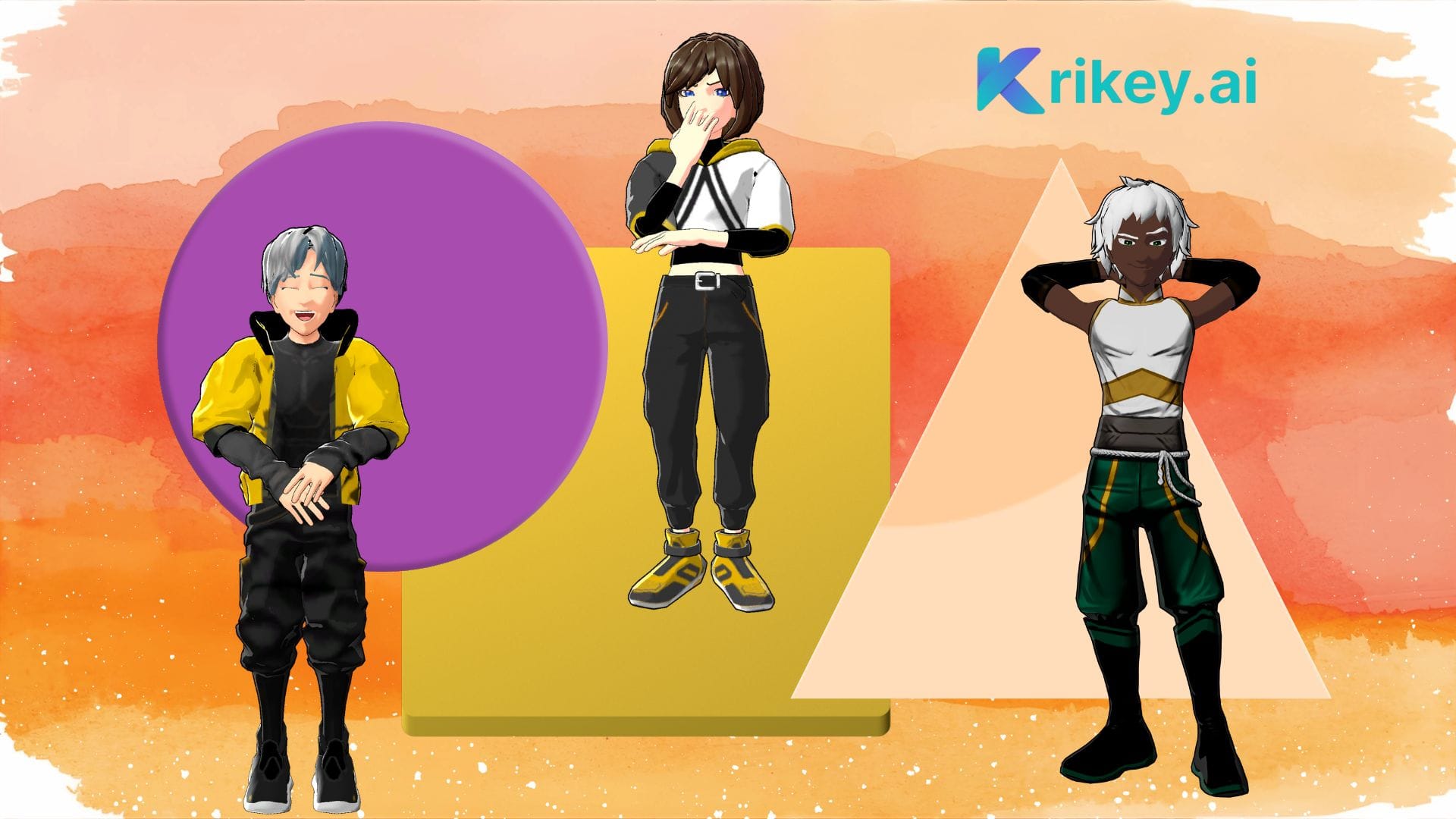
How to Create 2D Animation Examples with Krikey AI
If you want to create 2D animation examples quickly, Krikey AI makes it easy to turn a 2D-style character into an animated talking avatar using a simple, text-driven workflow. Below is a step-by-step:
Choose a 2D character from the library
Pick a 2D-style cartoon or avatar to use as your animated character. Explore the Krikey Cartoon Character store to pick your own 2D Cartoon character to animate.
Type a prompt for your scene
Describe what you want your animation example to be about — the message, tone, and what the character should do or say.
Customize expressions and motion
Once your video has generated, you have the option to adjust the character’s facial expressions, gestures, and overall animation style to match your example
Export and share your 2D animation example
Export your animation in a shareable format for portfolios, presentations, social posts, or educational content.
This workflow is useful for creators, like Vtubers for example, building 2D animation portfolio examples, testing 2D animation style examples, or producing fast animated content without traditional frame-by-frame animation.
Frequently Asked Questions (FAQs) about 2D Animation Examples
These FAQs highlight where 2D animation examples appear across entertainment, education, and marketing — and how Krikey AI helps creators produce professional, customized 2D animations inspired by the same storytelling principles used by top studios and brands.
What is the difference between 2D vs 3D animation examples?
The difference between 2D vs 3D animation examples lies in how visuals are constructed and perceived. 2D animation examples use flat, two-dimensional graphics defined by height and width, while 3D animation and 3D character rigging examples simulate depth, volume, and perspective using modeled objects and environments. This affects character movement, visual style, and production techniques.
What are some examples of 2D animation?
Examples of 2D animation include cartoon-style character animations, anime-inspired visuals, explainer animations, educational avatars, animated illustrations, and motion graphics. These animations rely on flat visuals rather than simulated depth and are commonly used in entertainment, marketing, social media, and digital storytelling.
How can I animate my own 2D animation portfolio examples?
To animate 2D animation portfolio examples, creators typically start with illustrated characters or designs and then apply motion, expressions, or dialogue. Modern animation tools and AI-assisted platforms allow creators to animate characters more quickly by simplifying movement and lip-sync workflows, making it easier to build portfolio-ready examples without complex frame-by-frame animation.
Where can I find 2D animation style pet illustration examples?
2D animation style pet illustration examples can often be found in artist portfolios, animation showcases, social media content, and character design collections. These examples typically feature stylized animal characters, mascots, or illustrated pets with expressive motion and playful design aesthetics.
What is 2D animation examples?
2D animation examples refer to animated visuals created using flat, two-dimensional graphics. These examples may include illustrated characters, animated scenes, explainer visuals, and stylized motion graphics. Unlike 3D animation, 2D animation relies on height and width rather than simulated depth, resulting in a distinctive artistic style.